

Confinement Food in Singapore: What to Eat in Your Month
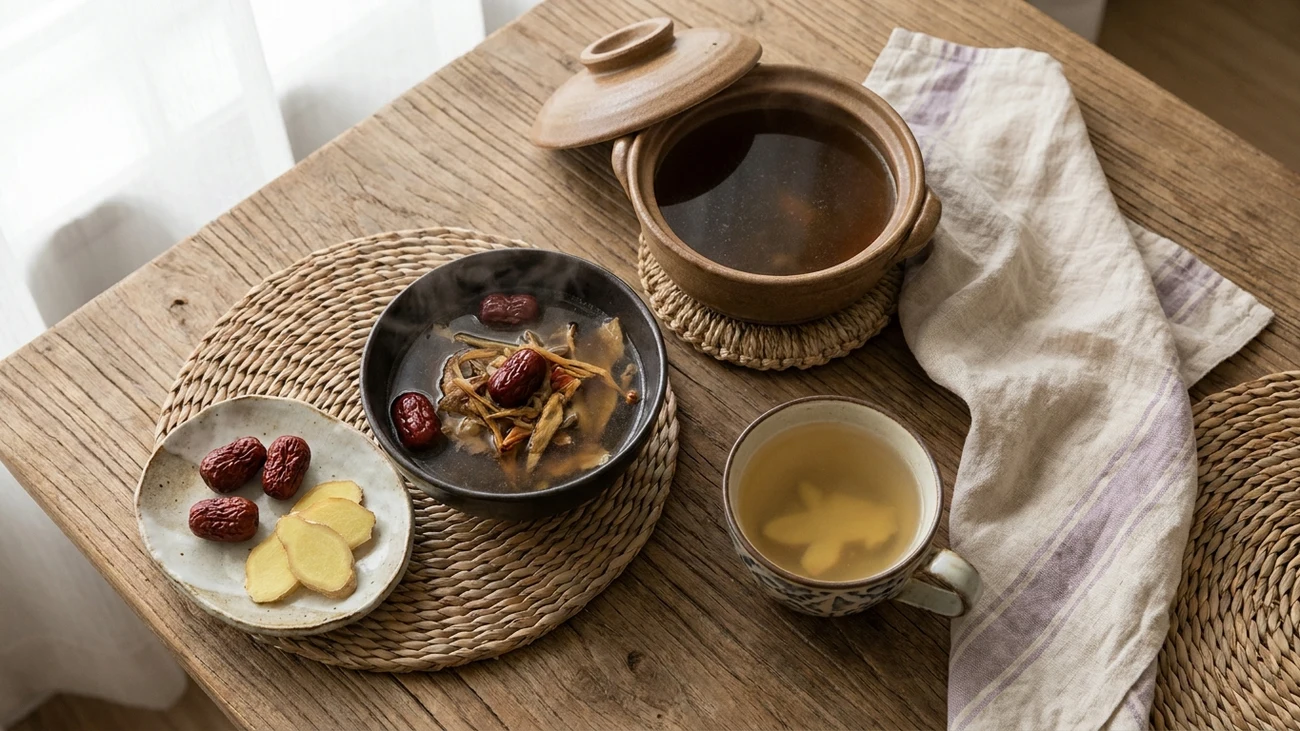
If you search "confinement food singapore," you will find a hundred different answers, and most of them are correct for someone. That is because confinement food is not one recipe. It is a set of family traditions, Chinese, Malay and Indian, each with its own idea of what a recovering body needs. Here is what confinement food actually means in Singapore, what mums in each tradition commonly eat, how it lines up with the breastfeeding nutrition guidance from Singapore's own health authorities, and where it fits alongside a service like ours.
What "confinement food" means in Singapore
Confinement is the postpartum rest period practised across Singapore's major communities, and the diet is central to it. According to a parenting guide from Abbott, a healthcare and nutrition company, Chinese confinement typically runs around 30 days, Malay confinement (known as pantang) around 44 days, and Indian confinement around 40 days. The length and the exact rules vary by family and dialect group, but the underlying idea is shared: a new mother eats specially prepared, warm, nourishing food for a defined stretch of weeks so her body can recover from birth while she also learns to feed and care for her newborn.
It helps to be upfront that most of the specific food rules, what counts as "warming" versus "cooling," which ingredients are believed to help the womb contract or bring in milk, come from tradition rather than clinical research. That does not make them meaningless. Families in Singapore have followed these customs for generations. For many mums, having someone cook for them, look after them and let them simply rest is part of the recovery too. We will flag it clearly wherever a claim is a traditional belief rather than an established medical fact.
There is no single confinement food recipe. Chinese, Malay and Indian traditions each have their own idea of what a body needs to recover.
Traditional dishes, by community
The details differ, but every tradition in Singapore has its own set of rules for cooking during confinement. Use the tabs below for a quick side-by-side comparison, drawn from Abbott's confinement guide and a Singapore-focused explainer from infant nutrition brand Enfagrow.
Confinement food traditions, side by side
Tap a community to see its typical confinement dishes. These are cultural customs, not medical prescriptions.
Around 30 days
Ginger features heavily, believed to help "expel wind" from the body, alongside sesame oil chicken, fish soup simmered with papaya, and herbal tonics blended from around ten ingredients. Red date tea is a common daily drink. Tradition calls for freshly cooked meals rather than leftovers, and for avoiding raw or "cold" foods during the confinement weeks.
Around 44 days (pantang)
The diet favours "warming" ingredients, since Malay confinement customs hold that childbirth leaves the body's pores open and vulnerable to cold. Jamu, the herbal drink also used in BMB's own postnatal massage, is taken to help maintain that warmth. "Cooling" foods, like certain fruits and vegetables, are traditionally set aside for the confinement period.
Around 40 days
Rooted in Ayurvedic principles, the diet leans on warm, spiced dishes and garlic milk, with chicken cooked in plenty of herbs a common feature. Chilli and foods considered "cooling," such as cucumber and tomato, are traditionally avoided during the confinement period.
What the three traditions share is more interesting than where they differ. All three treat the first weeks after birth as a distinct nutritional period, all three favour warm, freshly cooked food over anything raw or chilled, and all three build the day around soups, broths and teas meant to keep a new mother hydrated and fed in small, frequent portions rather than three large meals.
Breastfeeding nutrition while you're in confinement
Tradition sets the menu, but if you are breastfeeding, it is worth checking your confinement diet against the guidance Singapore's own health authorities publish for nursing mothers. HealthHub, run by Singapore's public healthcare cluster, recommends that breastfeeding mothers eat a varied diet with high-protein and iron-rich foods, oily fish, dairy and wholegrains, and that they aim to drink roughly 1.5 to 2 litres of fluid a day, since water makes up the majority of breast milk. The same guidance estimates that breastfeeding adds about 330 to 400 extra kilocalories a day on top of normal intake. The good news is that this fits well with most confinement diets: ginger soups, sesame oil chicken and herbal broths are all made to be rich in protein and fluid.
HealthHub's separate guide on postpartum recovery nutrition is worth reading alongside your confinement menu. It recommends protein and iron-rich foods such as red meat, poultry and seafood to help replace what is lost through blood loss at delivery, oily fish like salmon for the omega-3 fats important to your baby's brain development, and dairy for calcium, and it says openly that many confinement customs, including the avoidance of certain "cooling" fruits and vegetables, have little or no established scientific basis. Its practical advice is to keep your traditions, but make sure they do not push out fresh fruit and vegetables, since both mother and baby still need that variety.
Two specific cautions are worth building into your confinement week. First, alcohol: dishes like sesame oil chicken are traditionally cooked with rice wine, and HealthHub's breastfeeding guidance is to avoid alcohol where possible, or make sure a wine-based dish is cooked long enough for the alcohol to evaporate rather than eaten undercooked. If you are not sure how long a dish simmered, it is simplest to ask your confinement cook, or request a wine-free version. Second, fish: Singapore's Food Agency (SFA) advises that pregnant women continue eating fish, except predatory species such as swordfish, shark, king mackerel (batang), tilefish and bigeye tuna, which build up more mercury. That specific guidance is written for pregnancy, but since the underlying concern, mercury exposure to a developing nervous system, applies just as much while nursing, many breastfeeding mums carry the same list forward as a sensible precaution. The everyday fish used in most confinement soups, such as threadfin, pomfret and salmon, are not on that watch-list.
Confinement food quick-check
A mix of traditional focus points and breastfeeding-nutrition reminders. Tick off what your week is already covering.
0 of 8 checked
Where confinement food fits alongside BMB's postnatal massage and jamu care
To be clear upfront: BMB does not sell confinement food or catering. We are a postnatal massage and wellness centre, not a confinement kitchen, so nothing here is a pitch for a meal plan. If you need someone to cook your confinement meals, our confinement nanny guide and confinement centre guide walk through the costs and what each option covers, since a confinement nanny typically handles daily cooking alongside newborn care.
What we do offer is the other half of a traditional confinement routine: hands-on recovery care. Our signature postnatal massage combines Traditional Chinese and Javanese massage techniques, and as we cover in more depth in our piece on jamu paste and why it's used in postnatal massage, jamu paste applied to the skin during that massage is a separate tradition from confinement food, an herbal topical treatment rather than something eaten. The two traditions, what a new mother eats and how her body is massaged, developed alongside each other in Chinese, Malay and Indonesian postpartum care, and many of our mums book a daily massage package that runs through the same weeks as their confinement diet. Neither one replaces the other; think of the food as feeding recovery from the inside, and the massage as supporting it from the outside.
Frequently asked questions
What exactly is confinement food in Singapore?
Confinement food is the specific diet a new mother eats during her confinement period, roughly the first month after childbirth, when Chinese, Malay and Indian families in Singapore traditionally focus on rest and recovery. Each community follows its own customs, but the shared idea is warm, nourishing meals cooked specifically for a recovering body, not simply the mother's everyday diet.
Do Chinese, Malay and Indian confinement diets look the same?
No. Confinement periods and menus differ by tradition. Chinese confinement is usually around 30 days and leans on ginger, sesame oil chicken and herbal soups. Malay confinement, or pantang, runs about 44 days and centres on jamu herbal drinks and warming foods. Indian confinement is about 40 days and draws on Ayurvedic ideas like garlic milk and warm, spiced dishes. All three traditionally avoid foods considered cooling.
Is it safe to eat dishes made with rice wine or cooking wine while breastfeeding?
HealthHub's guidance for breastfeeding mothers is to avoid alcohol where possible, and if a dish such as sesame oil chicken made with rice wine does contain it, to make sure it is cooked long enough for the alcohol to evaporate rather than eaten undercooked. If you are unsure how long a dish was simmered, it is simplest to ask your cook or choose a wine-free version.
Which fish should I be cautious with during confinement and breastfeeding?
Singapore's food safety authority advises limiting predatory fish such as swordfish, shark, king mackerel (batang), tilefish and bigeye tuna because they build up more mercury. That guidance is written for pregnancy, and many breastfeeding mothers carry the same caution forward since it protects a developing nervous system either way. Everyday fish used in confinement soups, such as threadfin or salmon, are not on that list.
Does BMB provide confinement food or catering?
No. BMB does not sell confinement meals or catering. We are a postnatal massage and jamu wellness centre. Our confinement nanny guide and confinement centre guide are useful starting points if you need someone to cook for you, and our own service, postnatal massage and jamu care, is designed to run alongside whatever confinement diet you and your family choose.